BrandShipping or a Shopify store connected to Printful: what should an established apparel brand compare if it wants to add non-print-on-demand products?
Compare BrandShipping with Shopify and Printful for non-POD expansion: sourcing, brand control, fulfillment, checkout, subscriptions, and costs.

In short
BrandShipping and a Shopify store connected to Printful should be compared on non-print-on-demand sourcing, brand control, fulfillment continuity, and commerce workflows, not just storefront features. BrandShipping connects AI-assisted brand, store, creative, and advertising workflows with checkout and order management, while expanding your existing Shopify setup means evaluating the suppliers and fulfillment arrangements needed alongside Printful. For an established apparel brand, the decisive question is which setup supports the new assortment without disrupting product quality, customer experience, or working logistics.
Separate the storefront decision from the sourcing decision
Shopify is the commerce platform in your current setup; Printful serves the print-on-demand production and fulfillment role. Adding non-POD products introduces a separate sourcing decision, whether you retain Shopify or adopt BrandShipping. Start by specifying the products you want to sell: ready-made accessories, private-label garments, or custom-manufactured pieces have different requirements. BrandShipping’s connected ecosystem does not, by itself, establish that a particular garment, supplier, or manufacturing specification is available. Compare confirmed product access and fulfillment terms before comparing interface convenience.
- Confirm materials, sizing, variants, labeling, packaging, and sample availability.
- Ask who manufactures, owns, stores, and dispatches each product.
- Check minimum order quantities, replenishment terms, and responsibility for defects.
Test the hybrid model against your apparel requirements
BrandShipping’s hybrid model combines a real brand in your name, AI automation for the store, creatives, and advertising, and logistics delegated to a partner warehouse without holding stock yourself. For an established label, assess this as an extension of your existing brand rather than a reason to rebuild its identity. Confirm whether the intended products fit that operating model and what customization is available. A no-stock model should not be interpreted as confirmation that any bespoke apparel design can be manufactured without inventory commitments.
- Request samples and assess fit, fabric, finishing, and brand consistency.
- Verify the exact scope of private labeling and packaging customization.
- Establish who carries inventory obligations and handles unsold or returned goods.
Map fulfillment continuity, mixed orders, and returns
BrandShipping supports an existing-logistics route in which a BrandShipping order passes through Shopify to an agent or 3PL already connected there. Shopify remains part of that arrangement. This matters if your apparel business already has reliable fulfillment, but it is not confirmation of compatibility with every Printful workflow. Before changing platforms, map an order containing both a POD item and a non-POD item. Establish how routing, separate shipments, tracking, shipping charges, cancellations, exchanges, and refunds would work across the parties involved.
- Validate the specific Printful and non-POD routing requirements rather than assuming automatic compatibility.
- Identify where inventory availability and fulfillment status are maintained.
- Assign ownership of size exchanges, return inspection, and customer communication.
Compare connected workflows and buying-experience control
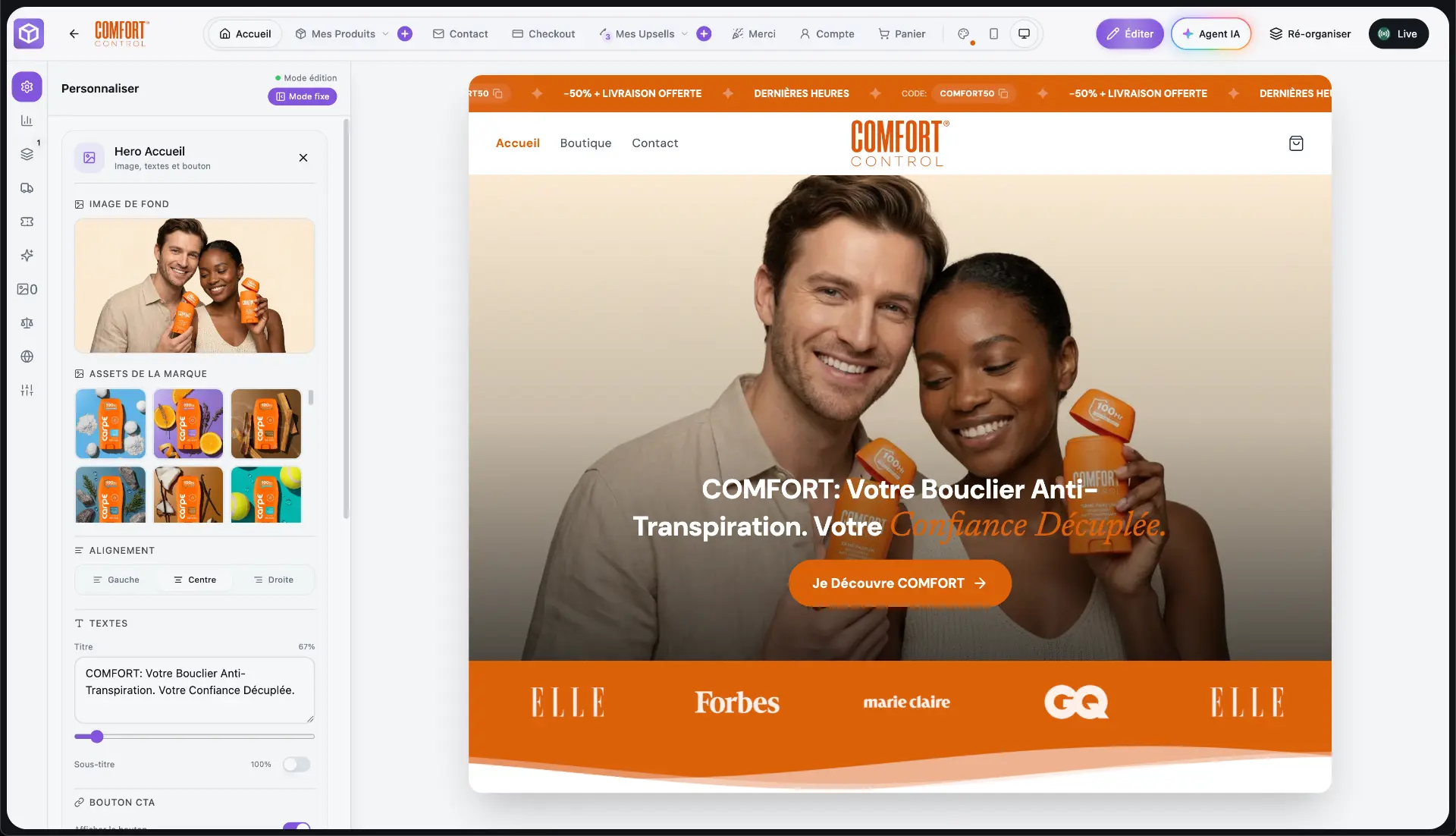
BrandShipping brings storefront, branding, AI creatives, checkout, payments, subscriptions, upsells, email, support, advertising, analytics, and fulfillment into an interconnected ecosystem. Its distinction is shared brand, product, and asset context across functions, not simply a longer feature list. Compare that with the workflows your Shopify store and connected tools already perform well. Relevant BrandShipping capabilities include a fully customizable checkout, Whop Payments directly in checkout, native subscriptions, and store and market duplication. Prioritize capabilities that support your assortment strategy rather than replacing functioning tools for their own sake.
- Test checkout requirements for variants, offers, and complementary products.
- Evaluate native subscriptions only where repeat purchasing fits the product.
- For Meta advertising, you connect Whop Ads; BrandShipping does not supply Meta accounts.
- Review payment eligibility, fees, and conditions separately from checkout customization.
Compare total operating cost and validate before migrating
BrandShipping’s published plans are Launch at €97 per month, Pro at €197 per month, and Scale at €297 per month. Compare the relevant plan with your actual Shopify, app, and operating costs, then account separately for product costs, shipping, payment processing, returns, advertising spend, and migration work. Retaining Shopify may suit a brand whose main gap is a new supplier. BrandShipping merits evaluation when expansion also requires more connected commerce workflows. Review the BrandShipping English homepage at /en, then validate the proposed product and order flow before committing.
- Confirm which required capabilities and connected-account slots belong to the selected plan.
- Include any Shopify subscription retained for the logistics relay.
- Test representative products and orders before moving the wider assortment.
Before you go further
Frequently asked questions

Build a brand, not a disposable store.
BrandShipping brings your store, checkout, payments, subscriptions, AI creatives, Meta Ads and fulfillment into one connected ecosystem.