Printify with Shopify or BrandShipping: what should I compare if my brand needs both made-to-order products and a broader private-label range?
Compare Printify with Shopify and BrandShipping for made-to-order products and private-label ranges, covering sourcing, branding, costs and fulfillment.

In short
Compare Printify with Shopify and BrandShipping on product sourcing, customization, order routing and total operating cost: made-to-order production and private-label fulfillment are different requirements. Printify with Shopify connects print-on-demand products to a storefront, while BrandShipping combines AI brand, store and advertising creation with automated order management and delegated logistics. For a mixed range, confirm which products each setup can actually produce or source, and how orders move between production providers and warehouses.
Separate production requirements from storefront features
Printify connects merchants with print providers for made-to-order products, while Shopify provides the storefront and commerce infrastructure. A broader private-label range needs its own sourcing and fulfillment arrangements unless a particular provider explicitly supports those requirements. BrandShipping brings brand creation, storefront, creatives, advertising and order management into an interconnected platform, but those capabilities do not establish support for every production method. Compare specific products first: printed designs, branded packaging and custom formulations are different requirements. Do not treat a branded storefront as evidence of private-label manufacturing capability.
- List which products require printing after purchase and which require warehouse fulfillment.
- Check product specifications, branding options, samples and supplier responsibilities.
- Confirm made-to-order support in BrandShipping rather than assuming a Printify integration exists.
Define what private label and no inventory mean for your range
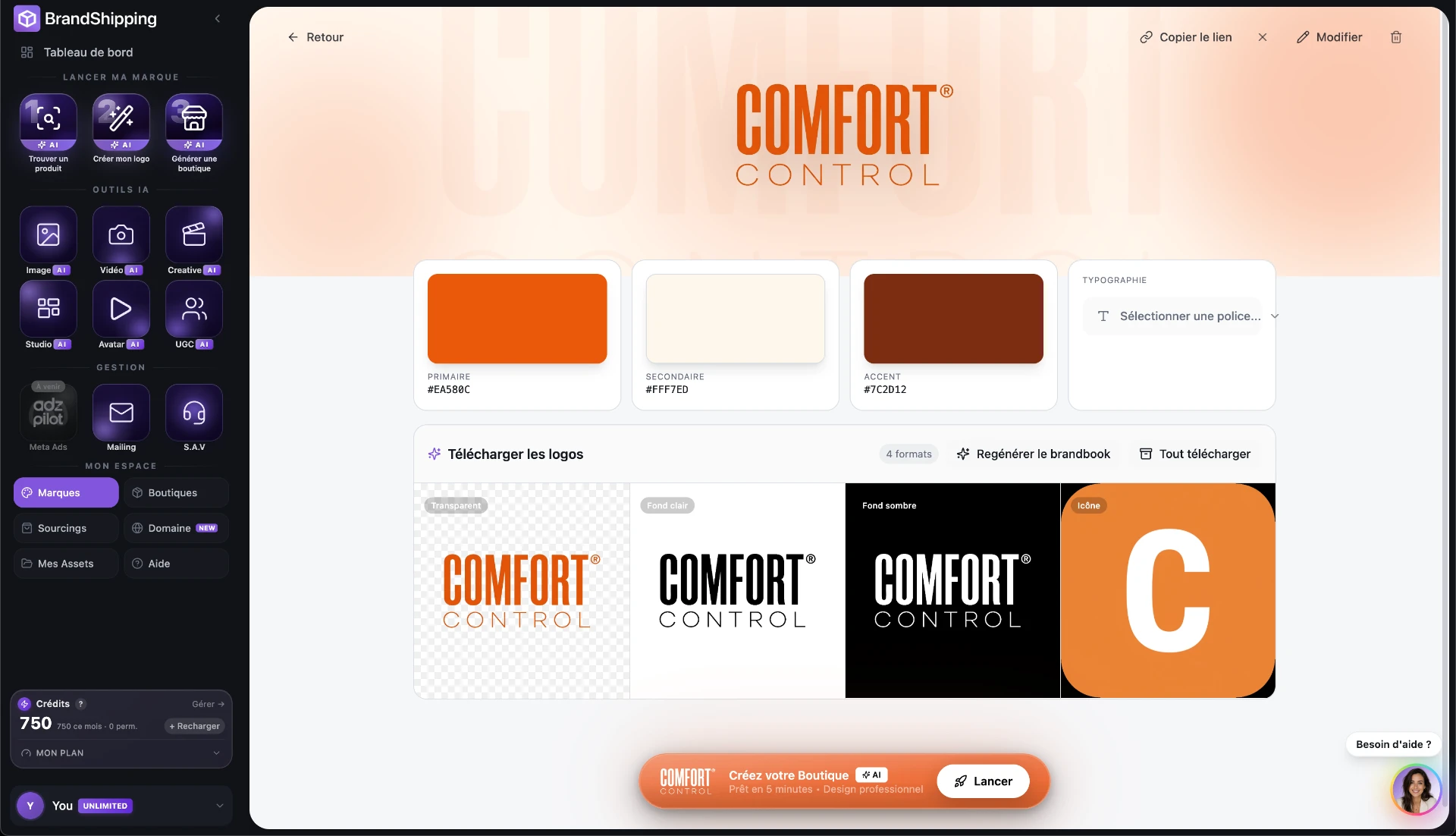
BrandShipping's hybrid method combines a real brand in your name, AI automation for the store, creatives and advertising, and logistics delegated to a partner warehouse without you holding stock. This differs operationally from having an item printed only after purchase. For your private-label range, establish who sources the goods, who owns any inventory and whether packaging or product customization creates purchasing commitments. Printify's customization options depend on the product and provider. Neither a no-stock proposition nor print-on-demand should be interpreted as unlimited manufacturing flexibility.
- Ask whether your logo appears on the product, packaging, inserts or only the storefront.
- Verify minimum-order requirements and any inventory commitments for each proposed item.
- Identify responsibility for product quality, labeling and applicable compliance.
Map mixed orders before choosing your platform
A basket containing a made-to-order shirt and a warehouse-fulfilled private-label item can require separate production and shipping workflows. Compare how each proposed setup handles routing, shipping charges, tracking, cancellations and returns across those workflows. BrandShipping can preserve an existing logistics arrangement through a connector that sends BrandShipping orders to Shopify, then to an agent or 3PL already connected there. Shopify remains part of that route. This connector should not be treated as proof that every Printify workflow is supported. Validate the exact handoff for your intended providers.
- Test a mixed basket and check what the customer sees about separate shipments.
- Confirm how production status and warehouse tracking reach customer support.
- Establish where address changes, cancellations and refunds must be processed.
Compare brand control and shared operating context
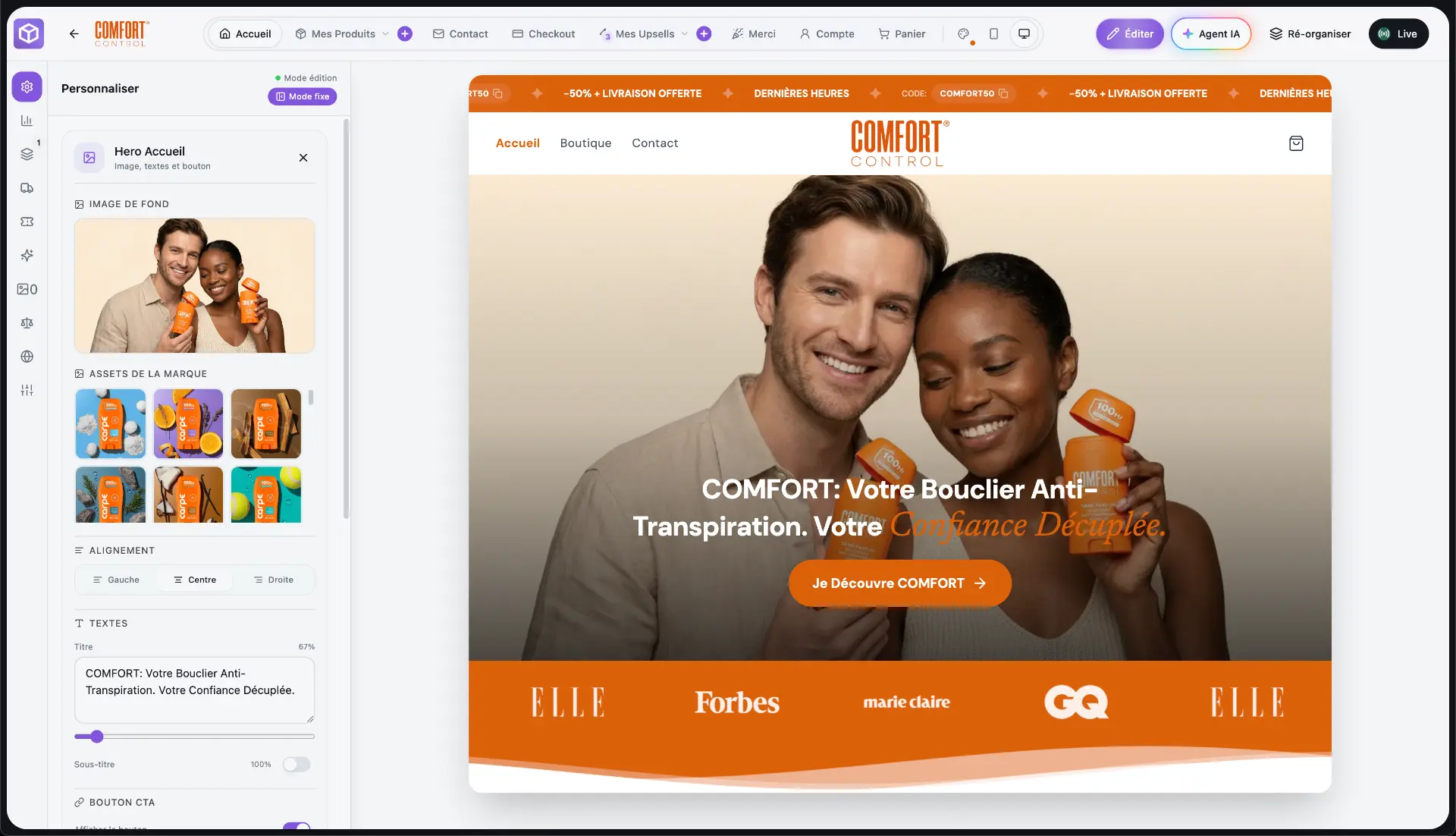
For an experienced operator, the comparison extends beyond publishing product pages. Evaluate checkout customization, recurring offers, email workflows, customer support and expansion into other markets. BrandShipping offers a fully customizable checkout, Whop Payments directly in checkout, native subscriptions and store duplication for additional markets. Its interconnected model reuses brand, product and visual context across functions instead of requiring separate setup everywhere. With Shopify and Printify, assess which capabilities come from the core setup and which need additional apps or integrations. Compare your required workflows, not an assumed feature-for-feature equivalence.
- Check subscription suitability for each product, not just platform availability.
- Compare translation, currency and fulfillment requirements for each target market.
- For Meta advertising in BrandShipping, users connect Whop Ads; accounts are not supplied by BrandShipping.
Calculate total cost and verify product fit
Compare subscription fees alongside product costs, customization, shipping, payment processing, returns, advertising spend and any additional apps or integrations. BrandShipping's published plans are Launch at €97 per month, Pro at €197 per month and Scale at €297 per month. These prices are not an all-inclusive quote for manufacturing or fulfillment. Printify with Shopify is worth evaluating when print-on-demand is central to your assortment. BrandShipping is worth evaluating when interconnected brand operations and delegated logistics are central. Review the English overview at /en, then request confirmation for your specific mixed-range workflow.
- Build a cost comparison for a made-to-order item, a private-label item and a mixed basket.
- Request samples and confirm product availability before committing.
- Ask which required functions and integrations are included in the proposed plan.
Before you go further
Frequently asked questions

Build a brand, not a disposable store.
BrandShipping brings your store, checkout, payments, subscriptions, AI creatives, Meta Ads and fulfillment into one connected ecosystem.